The Chinese Dragon
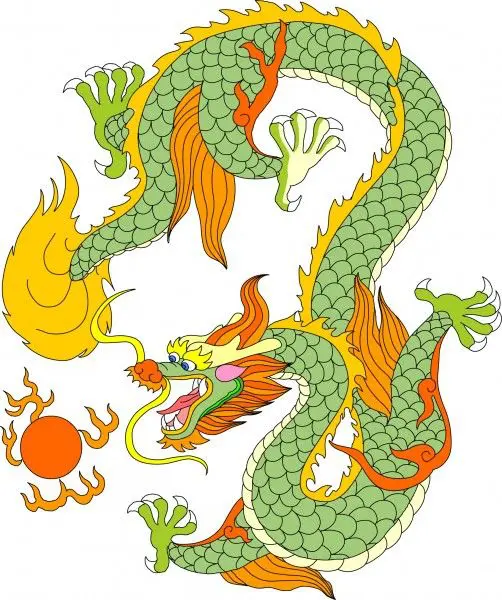
The first ancient images of a dragon date back to 5000-3000 BC. It was the times of the mystical Xia dynasty. Western researchers do not believe in it, but the Chinese do. These images were associated with the Chinese giant salamander, one of the oldest amphibians. This animal appeared only when it rained, therefore, the ancient Chinese believed that it ruled the water. Some researchers, however, do not entirely agree and believe that the Chinese crocodile became the prototype of the dragon.
One of the theories of the dragon’s origins is the theory of the conquered tribes. There was one tribe who had a pig as a totem, this tribe conquered all the surrounding tribes, and then attached their totems to the their own. As a result, a typical image of a dragon would have the following features: a snake’s body covered with fish scales, eagle’s legs, a wild boar’s snout, a deer’s antlers, bull’s eyes, and a horse’s mane (which is located on the tail). Earlier images of the dragon had wings, but since the Tang Dynasty these have been replaced by metaphorical clouds.
Originating from the water, how did this creature move to the sky? The Chinese, like many ancient civilizations, had a tradition of connecting stars into constellations. They noticed clusters of stars and gave them names. This is how the constellation of the dragon appeared, it was located in the East. In the Western Sector there was the constellation of a Tiger. So now we understand why the dragon is the ruler of the East.
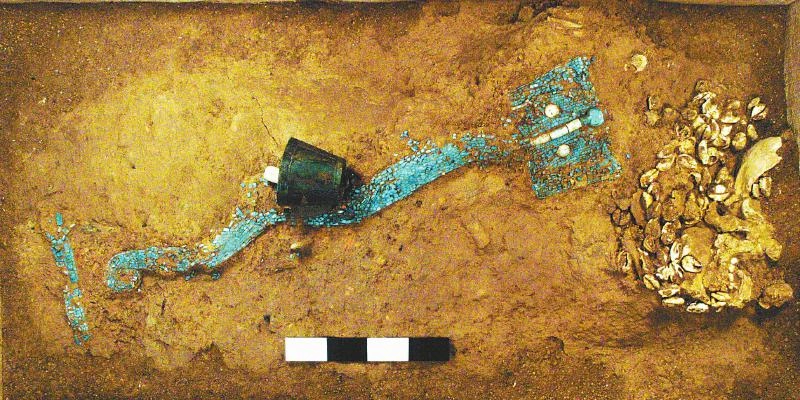
Until the Warring States Period, the dragon was not a sacred animal. It could be easily killed. There is a story that Emperor Yan summoned a dragon to help him, which, however, did not help him win the war. There is also a story about how people, having discovered the trail of a dragon, decided to hunt down and kill it, but the governor of the region stopped them, saying that they should not hurt nature if nature did not hurt people. Moreover, dragons could been eaten. Which is considered another proof to the theory of the giant salamander as a prototype to the dragon, since salamanders are still being eaten today. There is a story about a man who specialized in breeding dragons for the emperor (similar to dog breeding) and for some reason, when one of the dragons died, he prepared it as a meal for the empress, who, having just tasted dragon meat, was very pleased.
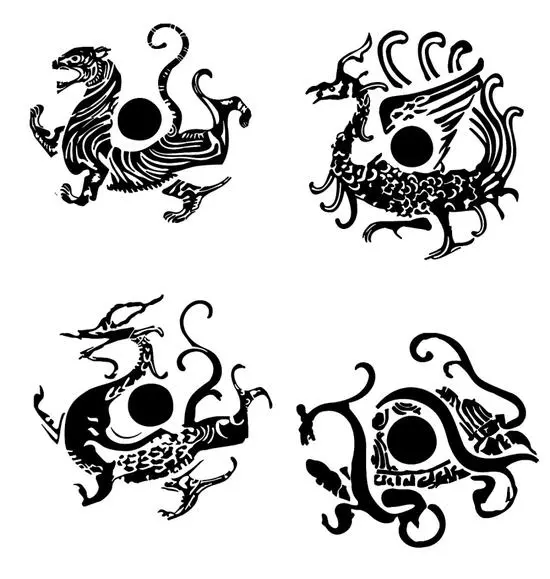
Starting from the Han dynasty (202 BC – 220 AD), the “social status” of the dragon changed. It became one of the four sacred animals, which included the qilin (Chinese unicorn), phoenix, turtle, and dragon. Here the dragon took the last place in the hierarchy. However, during the Tang Dynasty (618 AD – 907 AD), the dragon was “promoted” and became the most important sacred animal.
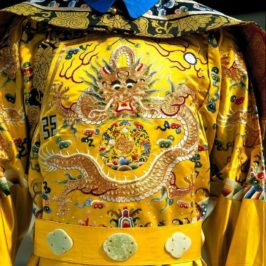
From the 13th century until the end of the history of imperial China (Ming and Qing dynasties), the dragon became a symbol of the Emperor. During this time, the dragon became a mirror representation of the emperor, the dragon was the emperor of the heavens, while the emperor was the dragon on earth. Only the emperor and empress had the right to wear the image of a dragon on their clothes, and a real dragon had five fingers on its paw. Other members of the imperial family could wear a dragon image, with only four or three fingers. Wearing a five fingered dragon was tantamount to rebellion and was punishable by death. Anyone who did not belong to the members of the imperial family but had a dragon on their clothes was a subject to a death sentence. On the other hand, dragons could be carved on furniture (unless they had five fingers).
Ordinary people did not care about royal symbols, but the dragon as the lord of the water was a completely different concept. The dragon was worshipped by those who lived along the banks of large reservoirs, rivers and seas. Dragons could protect from floods, and protected fishermen and sailors, so in China you can find ceremonies and dragon dances, as well as quite a few temples dedicated to the Dragon King.
Here is an interesting story concerning the dragon. In one of the villages, near the West Lake in HangZhou, there was an old well where a dragon settled. The power of the dragon was transferred to the water, so the tea trees that were watered with this water began to bring special leaves. That’s how Long Jing tea, Dragon Well tea, one of the finest green teas in China appeared.

For more information, see our Cookie Policy